The Operational Risks of Not Having a B2B Portal
The "Invisible Threat" to your margins isn't just about lost time—it's about the systematic erosion of profitability caused by manual friction, siloed data, and customer drop-off.
The Cost of Doing Business in the Dark Ages
Sales Projected
By 2026
By the end of 2026, we expect at least 80 percent of all B2B sales transactions between suppliers and buyers to occur within a digital channel. Many mid-sized manufacturers and distributors still use a combination of PDFs, email, and manually created spreadsheets to administer their wholesaler network.
While the traditional method may appear adequate, the lack of digital platform support is quietly eating away at profit margins. Operational friction increases dramatically when buyers can't log-in to their account, view inventory, or place orders independently. In turn, this friction severely limits an organization's ability to scale profitability.
The Current Digital Transformation Landscape
We now see a generational shift in B2B procurement. Today's modern B2B buyer is much more likely to be a digital native than in years past and, therefore, will expect the same kind of easy to use, self-serve experience he/she receives when making purchases in his/her daily life. He/she does not want to have to wait 24 hours to get a reply by e-mail from a sales representative with a PDF quote and does not want to call a company to ask if the products are in stock through a phone.
In this new world of manufacturing there is a shift from "relationship-based selling" to "experience-based selling". Those organizations that are gaining market share today are those that allow the buying process to be as simple as possible. Companies that force customers through old, labor-intensive processes are unintentionally sending their most loyal distributors into the arms of digitally mature competitors.
Relationship-Based Selling
Manual Quotes • Email Friction • Phone Verification
Experience-Based Selling
Self-Serve Portal • Instant Inventory • Digital Native UI
The Core Problem Breakdown:
6 Risks Strangling Your Operations
A manufacturer that does not have an integrated B2B customer portal will absorb significant amounts of untracked operational risks daily.
Order Visibility
Manual Entry
Stale Pricing
Inventory Blind Spots
Revenue Ceiling
Account Growth
The "Black Hole" of Order Visibility
Without a portal, buyers have zero visibility into their status of their orders once they submit a purchase order. This creates a vicious cycle. The buyer will repeatedly call, send emails, etc. asking, "where is my order?" or "can I get a copy of my invoice?" Because of this, your highly compensated customer service and sales teams are reduced to being administrative assistants, rather than solving complex issues at the account level or providing higher level support for additional revenue, as they spend hours digging through ERP screens.
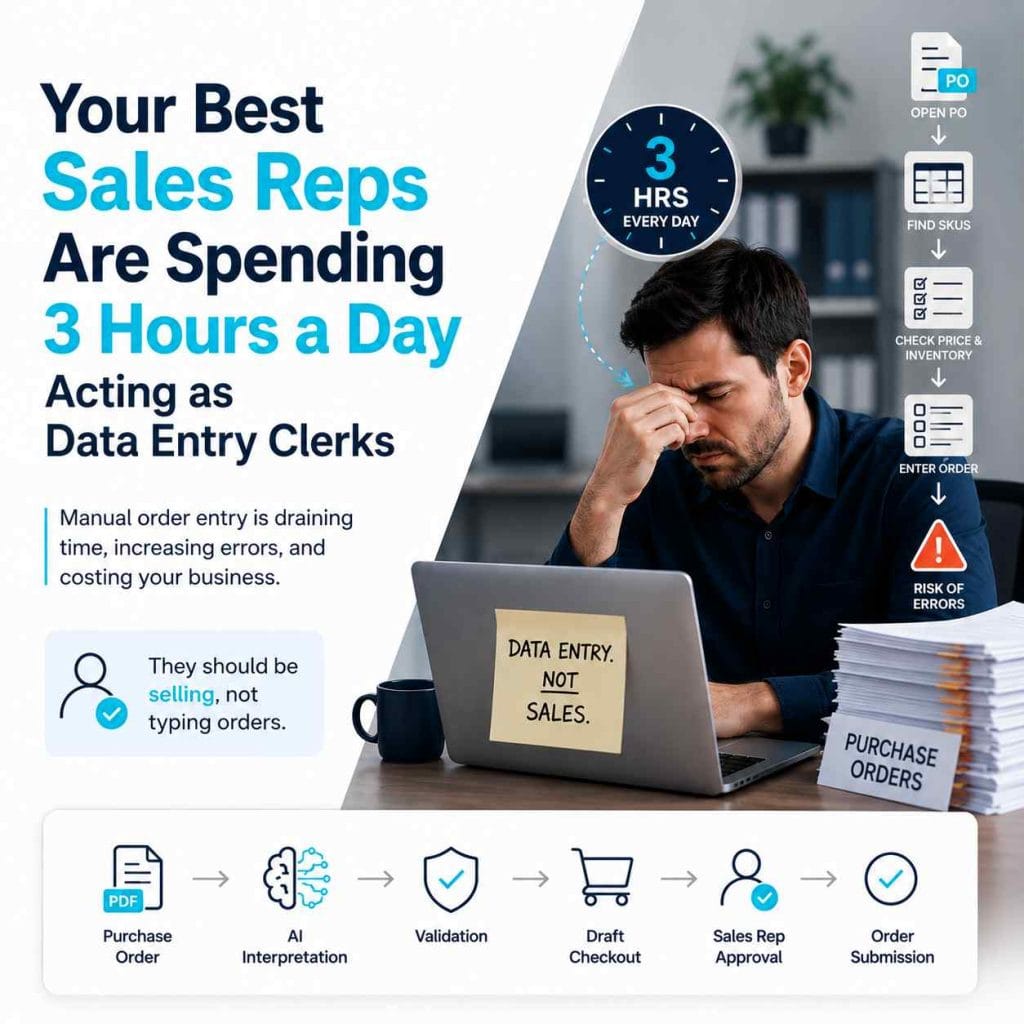
Error-Prone Manual Order Entry
When an email is sent from a distributor to a customer with a 50-line purchase order, a person has to input the information manually for each line item into their ERP system. As a result of this manual process, it's almost impossible to avoid making mistakes. Whether you enter a wrong SKU or the wrong current price (the price at the time of entry) into the system; as soon as one piece of incorrect information is entered into the ERP, the subsequent steps are going to be expensive. The cost associated with correcting the mistake may include reverse logistics, restock fees, credit memos and next day shipping on a new product. This can completely eliminate the profit margin of the entire order.
Misaligned and Stale Pricing
B2B pricing can be very complicated and may include tiered discounts, contract-based matrices, and volume breaks. Due to the fact that there is no portal to pull current prices from the ERP, sales representatives and buyers are forced to use stale, static price lists on their computers to determine current prices. As such, this creates issues with misquoted orders, as well as invoice disputes and a loss of trust when the buyer receives an unexpected charge for a higher rate than was previously quoted.
Inventory Blind Spots and Stockouts
A lack of a digital portal results in buyers ordering blind. When an order for 500 units of a critical component is placed, there is no way for the buyer to know how many of those parts are available at their company until a sales representative tells them that number several hours later. This can result in back orders; the procurement team being forced into frantic searches to locate additional sources of supply; and the loss of the account as the customer begins using other suppliers to make up the difference.
The 9-to-5 Revenue Ceiling
Global supply chains never sleep, but your sales team does. Because you don't have an automated self-service ordering portal for your distributors, you cannot generate revenue outside of your local time zone. So if a distributor wants to order from your company at 2:00 AM EST, he or she has to wait. Lack of 24/7 ordering capability, limits your potential revenue velocity.
Stagnant Account Growth (The Order-Taker Trap)
Outside sales teams should be strategic consultants, helping you understand the distributor's business objectives as well as opening up new territory. However, because of the lack of a portal, your outside sales team spends 60% of each day performing basic data entry on orders taken by phone. You are paying a premium salary for data entry instead of for overall business growth.
The Broader Business Impact
These individual friction points aggregate into three massive threats to the enterprise:
Operational Bloat
The cost to serve a customer becomes artificially inflated. In order to grow your client base, you have to increase the number of customer service representatives to support the increasing volume of manual paperwork for that client base.
Revenue Churn
B2B loyalty is significantly linked to the level of convenience. If a competitor allows the buyer to reorder their standard quarterly inventory with only two clicks in an online portal, the buyer will eventually stop using your manual, friction-filled process.
Scalability Paralysis
Manual operations increase linearly. For example, if you want to double your revenue, you have to double your staff just to support the increased administrative burden. True scalability requires decoupling revenue growth from employee growth.
Knowledge Framework:
The Cost-to-Serve Escalator
To understand this risk, executives must evaluate the "Cost-to-Serve Escalator." Every time a human touches an order, the cost goes up and the margin goes down.
Level 1 (Digital Self-Service)
Buyer logs into portal → sees custom pricing → clicks reorder. System routes instantly to ERP. Cost to process: $5. Margin intact.
Level 2 (Email/Phone Order)
Buyer emails PO → Rep reads it → Rep types it into ERP. Cost to process: $35. Margin reduced.
Level 3 (The Exception Order)
Buyer emails PO → Rep types it → makes an error → ships wrong part → customer calls to complain → return shipping → credit memo issued → rush shipping on correct part. Cost to process: $150+. Margin destroyed.
The Way Ahead:
Building a Resilient Digital Ecosystem
A digital storefront needs to be created in order for a B2B company to mitigate risk associated with its B2B sales. A generic ecommerce website does not provide an adequate solution. An organization’s B2B sales can be significantly enhanced by implementing a dedicated B2B portal. The B2B Portal will act as a secure entry point into the back office operations of the company.
Modern platforms, such as Magento (Adobe Commerce), allow manufacturers to create authenticated experiences. Once a distributor logs in to the B2B portal, it can immediately communicate with the company’s back-office systems and display the distributor’s exact negotiated price, specific credit limit, and current available inventory from the nearest warehouse.
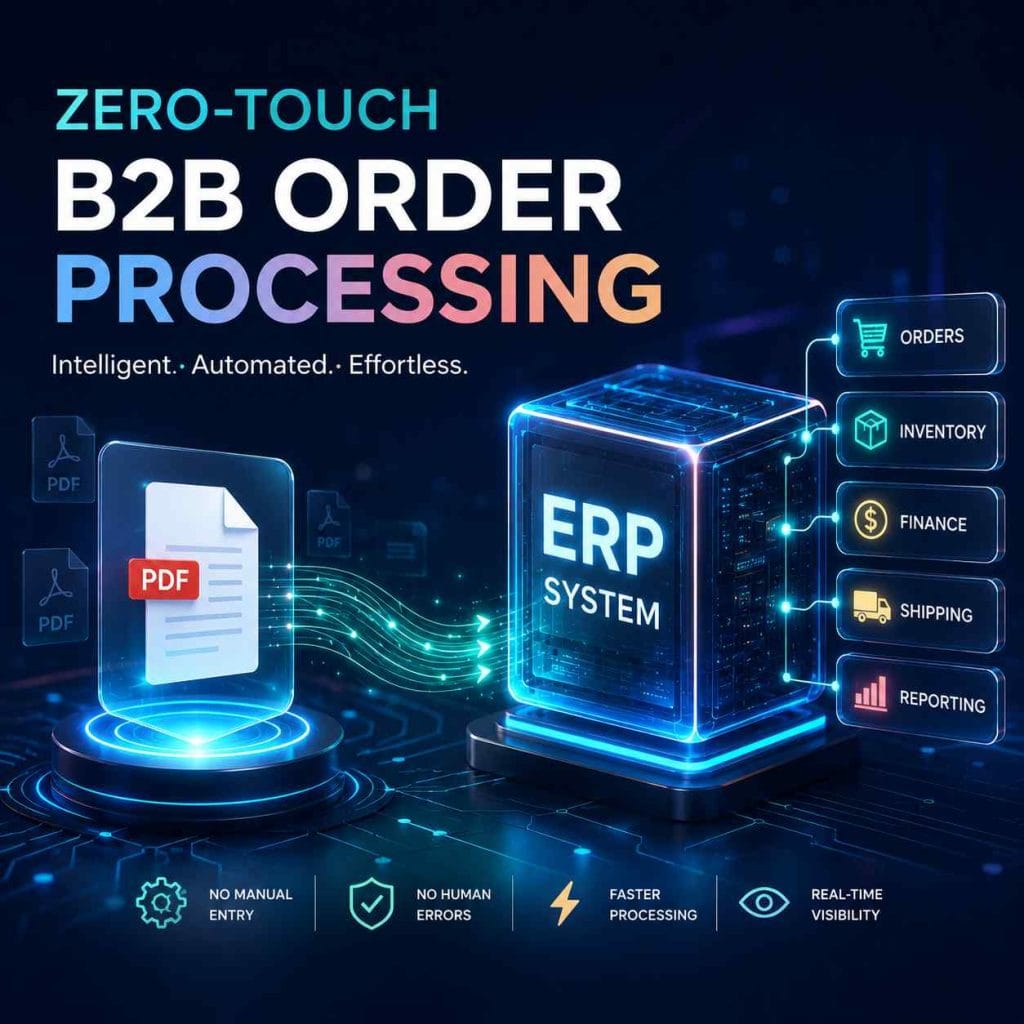
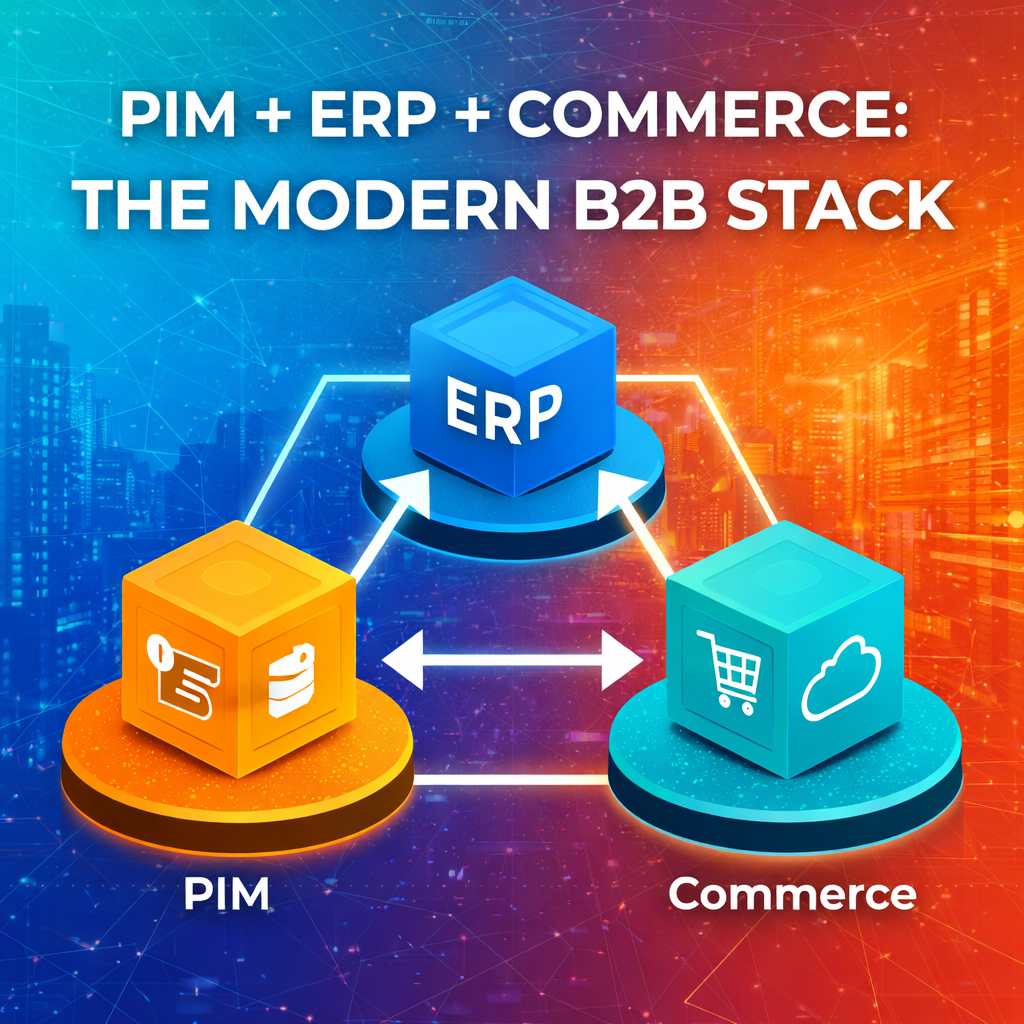
However, a portal is only as intelligent as the data being fed into it. In order for a digital storefront to operate flawlessly, IT professionals need to ensure that the correct foundational architecture is supporting it. Therefore, IT professionals must ensure the front-end experience of the digital storefront is closely connected to the company’s back-office systems. For further information regarding the proper way to design foundational architecture, please refer to our strategic guide on PIM + ERP + Commerce: The Modern B2B ( COMING SOON ). In meantime, for any B2B eCommerce requirements, feel free to connect with us: Explore our B2B eCommerce Solutions
Dedicated B2B Portal
Magento (Adobe Commerce)
ERP System
Negotiated Pricing & Credit Limits
PIM System
Product Information Management

Rajeesh E R, COO of Ceymox, is an operations-driven leader with a strong focus on execution excellence, scalable delivery models, and operational innovation within the digital commerce ecosystem. As a core member of Ceymox’s leadership team, Rajeesh ensures that strategy seamlessly translates into action—driving efficiency, consistency, and sustainable growth across the organization.With extensive experience in managing operations for IT and eCommerce service enterprises, Rajeesh plays a pivotal role in building streamlined workflows, optimizing cross-functional collaboration, and establishing predictable, high-performance delivery frameworks. His leadership emphasizes process maturity, quality assurance, and continuous improvement, enabling Ceymox to scale confidently while maintaining service excellence.Beyond operational metrics, Rajeesh is deeply committed to strengthening internal systems, empowering teams, and aligning execution with long-term business objectives. His hands-on, results-oriented approach continues to shape Ceymox’s ability to deliver value to global clients while expanding its footprint in the Magento and digital commerce landscape.
View All Articles