How ERP Integration Works in B2B eCommerce: De-risking Enterprise Architecture
Building a high-velocity digital sales channel doesn't require replacing your foundation. Master the architecture that bridges your secure "System of Record" with a modern "System of Engagement" to scale your business operations.
The Integration Imperative: Bridging the Digital Divide
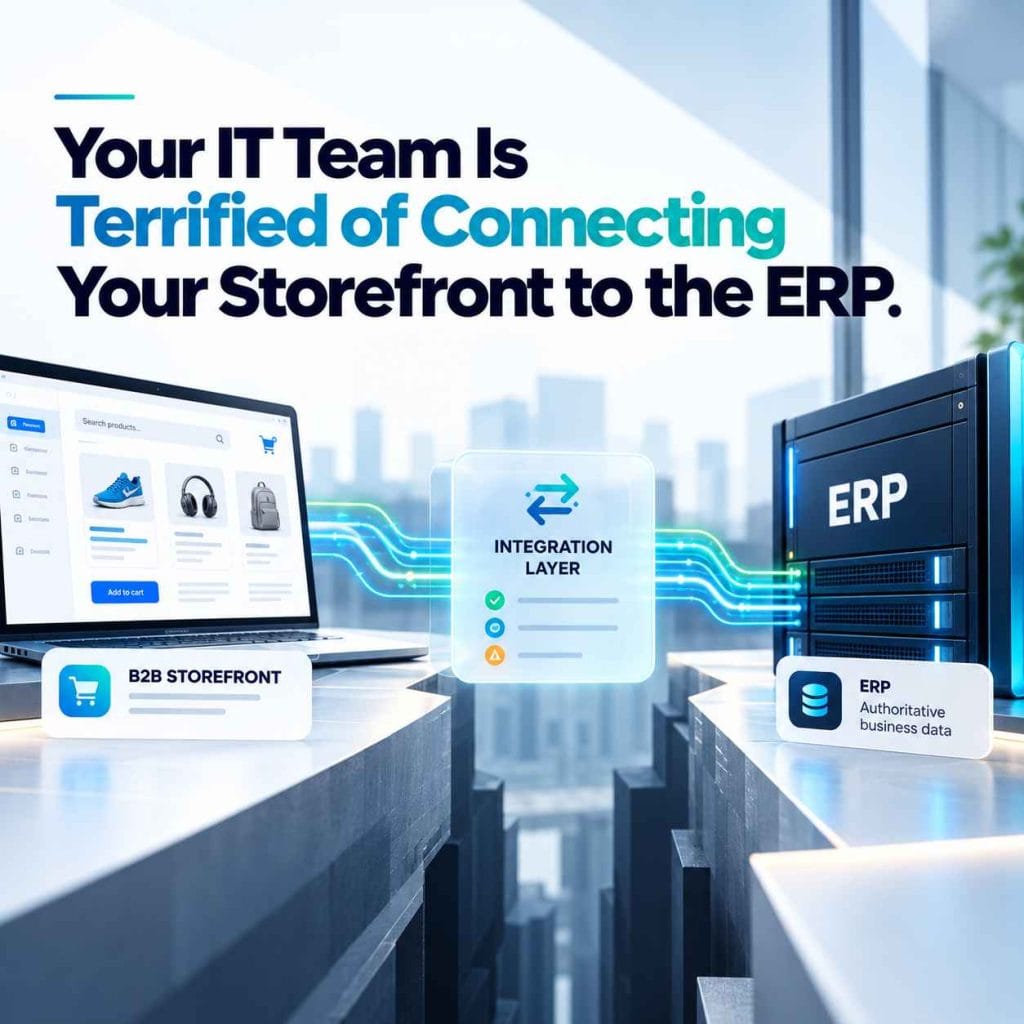
For manufacturers and distributors generating $20M–$500M in annual revenue, launching a new eCommerce site is rarely the top priority—and in reality, it’s only a small part of the challenge. The real work begins behind the scenes, where significant technical effort is required to connect the storefront to your ERP and broader business systems.
B2B buyers expect far more than a basic online catalog. They need access to their contract-specific pricing, real-time inventory from the nearest warehouse, and a complete history of orders and invoices.
The result is a disconnected system that forces teams to rely on manual workarounds—phone calls and duplicate data entry—undermining the purpose of digital transformation.
Contract Pricing
Deliver unique, negotiated pricing logic to every procurement officer automatically.
Live Inventory
Real-time warehouse verification to eliminate backorders and supply chain blind spots.
Order History
Full self-service access to past invoices, order status, and rapid re-ordering tools.
Break Operational Silos
Scale your digital revenue streams with predictable architecture.
Problem Recap: The Cost of Disconnected Systems
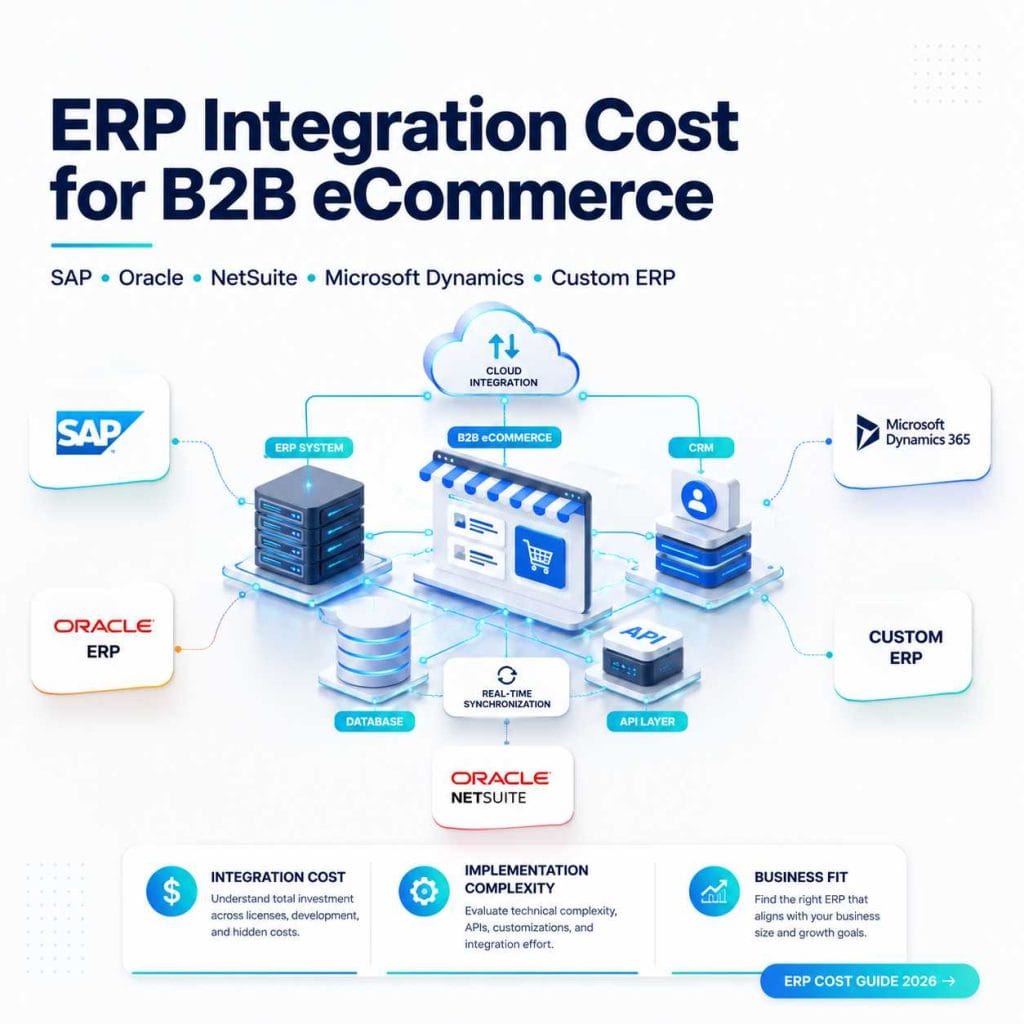
Historically, B2B companies have viewed their Enterprise Resource Planning (ERP) systems—such as SAP, Microsoft Dynamics, NetSuite, or Epicor—as secure, centralized hubs of critical business data. These systems manage everything from financial ledgers and warehouse operations to complex pricing structures.
Inventory Blind Spots
Selling products online that the ERP already knows are out of stock, resulting in unexpected backorders and frustrated procurement teams.
Pricing Discrepancies
Displaying generic MSRP pricing instead of contract-specific pricing, forcing distributors to contact sales representatives and complete purchases offline.
Data Entry Bottlenecks
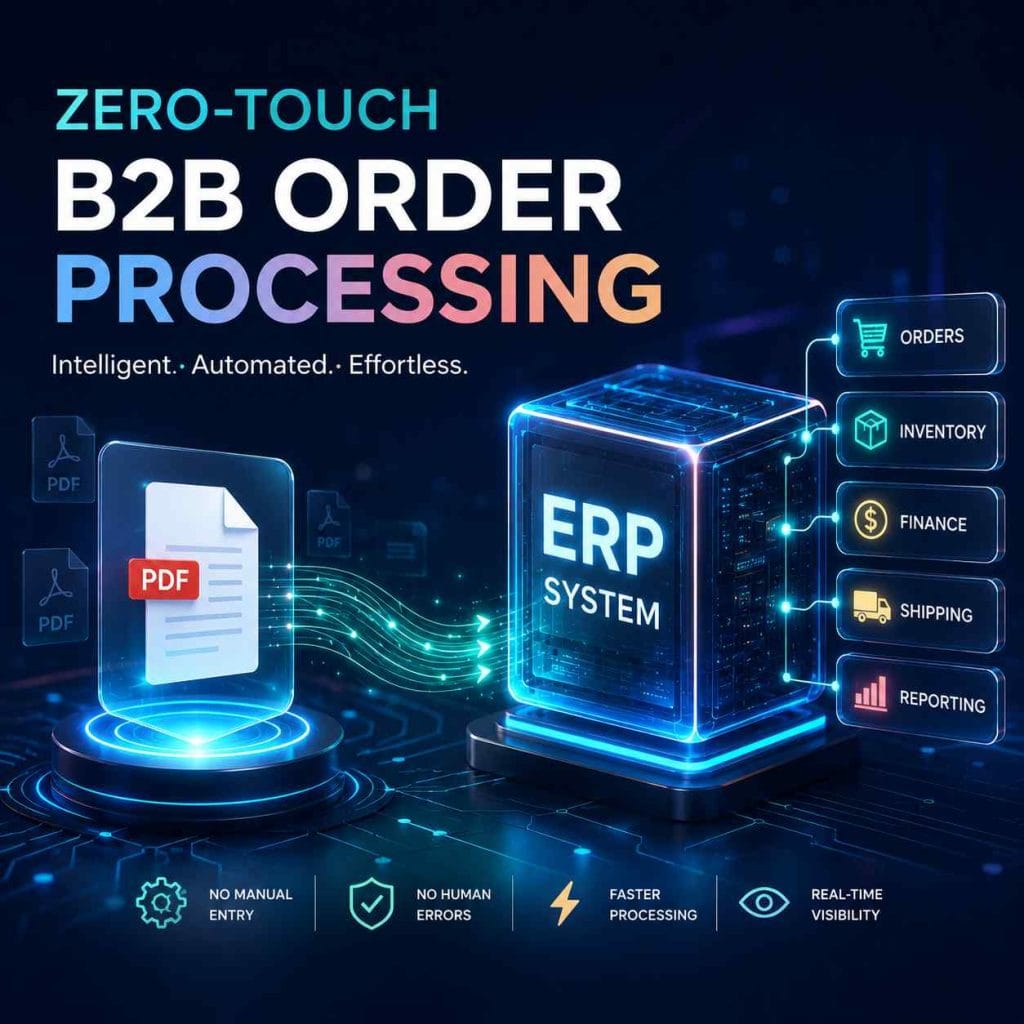
Manually re-entering online orders into the ERP, increasing risk of human error and leading to costly returns and reverse logistics.
The challenge is no longer integration itself—it’s designing it to handle complex, high-volume data without compromising ERP performance during peak demand.
Architectural Approaches to ERP Integration
Point-to-Point Custom Coding
Building bespoke code to connect the eCommerce platform directly to the ERP database for immediate data flow.
Fragile "spaghetti architecture" that breaks with any system update, making it nearly impossible to scale or maintain long-term.
Legacy ERP Portals
Utilizing the pre-built web interface provided by your ERP vendor as the primary customer storefront.
Highly rigid systems that lack PIM flexibility, modern SEO capabilities, and the intuitive UX required to meet modern buyer expectations.
Basic SaaS API Connectors
Deploying standard, out-of-the-box connector apps between SaaS platforms and enterprise systems.
Sufficient for simple B2C syncs but collapses under B2B complexity like tiered pricing, routing logic, and account hierarchies.
Middleware & Composable Commerce
Integrating Adobe Commerce via an iPaaS or dedicated middleware layer for flexible, standardized data flow.
The preferred choice for mid-market scale. Ensures stability under high load and secures transactions even during ERP maintenance.
Evaluating Your Integration Readiness
Before selecting an integration tool or commerce platform, executives must first assess their operational requirements. The evaluation should be guided by a structured decision framework.
ERP API Maturity
Assess if your ERP supports modern REST/GraphQL APIs or relies on flat-file transfers. Your commerce platform must adapt to these core capabilities.
Payload Scalability
Ensure the architecture handles bulk transfers asynchronously—processing thousands of price updates without hitting API rate limits or slowing performance.
Account Hierarchies
Support advanced distributor workflows by mapping parent companies to master accounts with controlled regional spending and access limits.
The PIM Factor
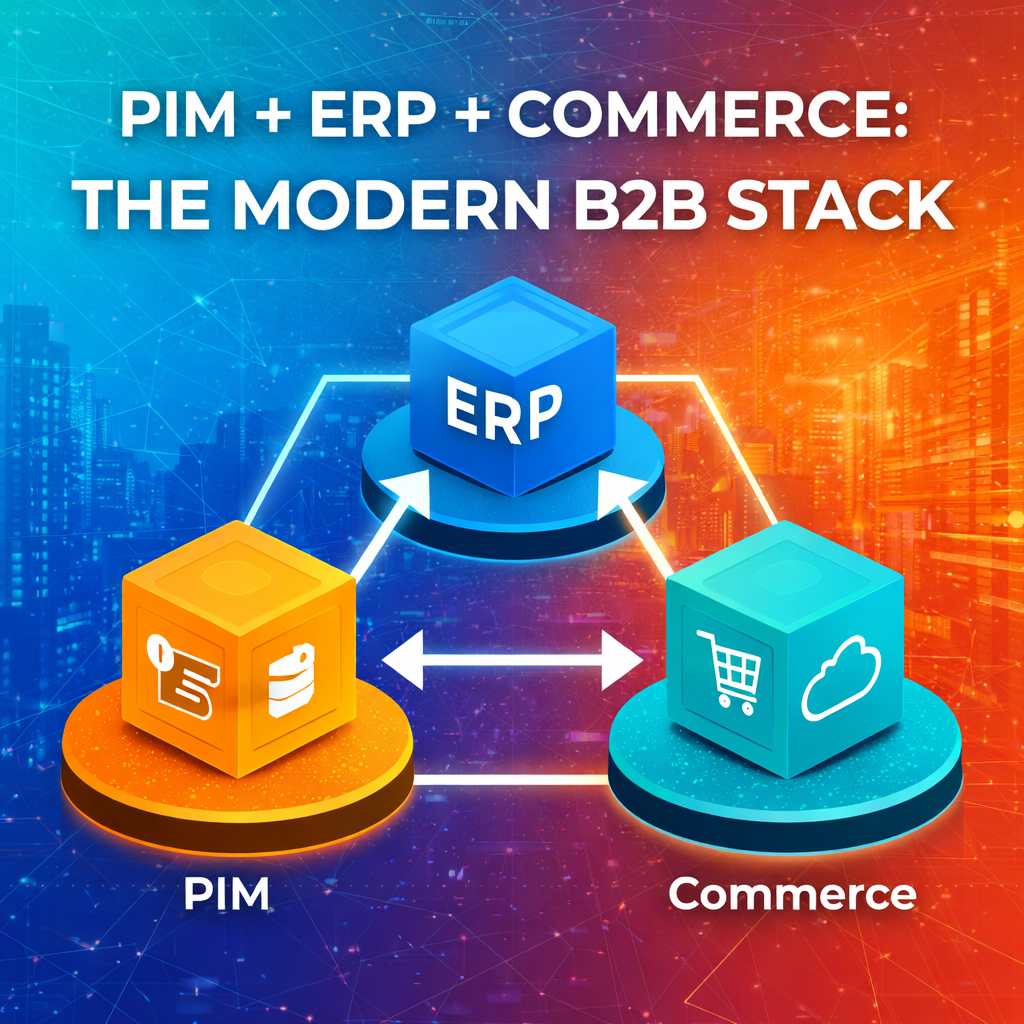
Clearly separate financial data from marketing data. Use a PIM for rich content management while the ERP remains responsible for pricing and inventory.
Global Mapping
Manage multi-currency and multi-tax configurations from a single instance, accurately mapping transactions to regional ERP entities automatically.
Common Implementation
Challenges to Avoid
The "Master Data" Tug-of-War
Unclear data ownership is a primary cause of integration failure. If a customer’s shipping address can be modified in both the eCommerce platform and the ERP, conflicts are inevitable. Establishing clear “systems of record” is critical—where the ERP owns core financial data and the commerce platform reads from it.
Demanding 100% Real-Time Sync
Attempting to synchronize all data in real time can overwhelm system performance. Instead, IT leaders should classify data based on its operational importance:
Ignoring Edge-Case Business Logic
Integrations designed only for ideal (“happy path”) scenarios fail during real-world exceptions. For instance, if an order exceeds a credit limit, the system must place the order on credit hold within the ERP while triggering a notification in the commerce platform.
Case Example:
The $150M Automotive Parts Distributor
The Legacy State
Managing over 250,000 SKUs through an on-premise Epicor ERP. Bulk orders arrived via emailed spreadsheets, requiring 12 clerks to manually enter data.
The Transformation
Magento + Custom Middleware Layer
Middleware designed for 15-minute delta updates from Epicor, ensuring fast page loads without ERP strain.
Real-time contract pricing retrieval upon login, flowing seamlessly into Epicor fulfillment with zero manual touch.
By bridging the gap between secure back-office logic and a high-performance storefront, the distributor eliminated 100% of manual data entry bottlenecks.


Jancy Abraham, an enthusiastic and passionate Senior Magento Developer at Ceymox, boasting over 9 years of expertise in website development, with a dedicated focus on Magento 2. In her illustrious career spanning 7+ years in Magento, encompassing both Open Source and Commerce editions, she has been instrumental in crafting innovative solutions since October 2013. Jancy has spearheaded the development of numerous Magento extensions tailored to diverse projects, showcasing her exceptional skills and commitment to excellence. Notably, she holds the prestigious Adobe Commerce Developer Professional Certification, underscoring her proficiency and dedication to mastering her craft.
View All Articles