B2B eCommerce Implementation: Cost, Timeline & Architecture
Everything you need to plan, evaluate, and execute a scalable B2B commerce transformation. Navigate complexities with structured architecture blueprints and financial frameworks.
Everything you need to plan, evaluate, and execute a scalable B2B commerce transformation
Manufacturers and distributors are under increasing pressure to modernize how they sell. Today’s buyers expect digital-first experiences, real-time data, and seamless, low-friction purchasing.
Yet many organizations continue to operate with fragmented systems, manual processes, and ERP-dependent workflows that severely limit scalability.
If your business is struggling with slow order cycles, heavy reliance on sales teams, or inefficiencies in managing complex pricing and product catalogs, you’re not alone.
This guide is specifically engineered to help you move beyond those operational bottlenecks.
We provide the definitive roadmap to transition your architecture from a legacy cost-center into a revenue-generating digital channel.
The Strategic Problem
Facing Manufacturers
Traditional B2B sales models are rapidly becoming outdated. Manufacturers and distributors are facing a convergence of challenges that threaten long-term scalability.
Increasing customer expectations for self-service and digital access.
Growing complexity in product catalogs and multi-tiered pricing structures.
Rising operational costs driven by reliance on slow, manual processes.
Mounting competitive pressure from digitally advanced, agile players.
Most organizations attempt to scale using systems that were never designed for commerce. This often leads to inefficiencies that directly impact revenue, customer satisfaction, and long-term growth.
The core issue isn’t a lack of technology—it’s the absence of a connected commerce architecture.
Why Traditional
Systems Fail
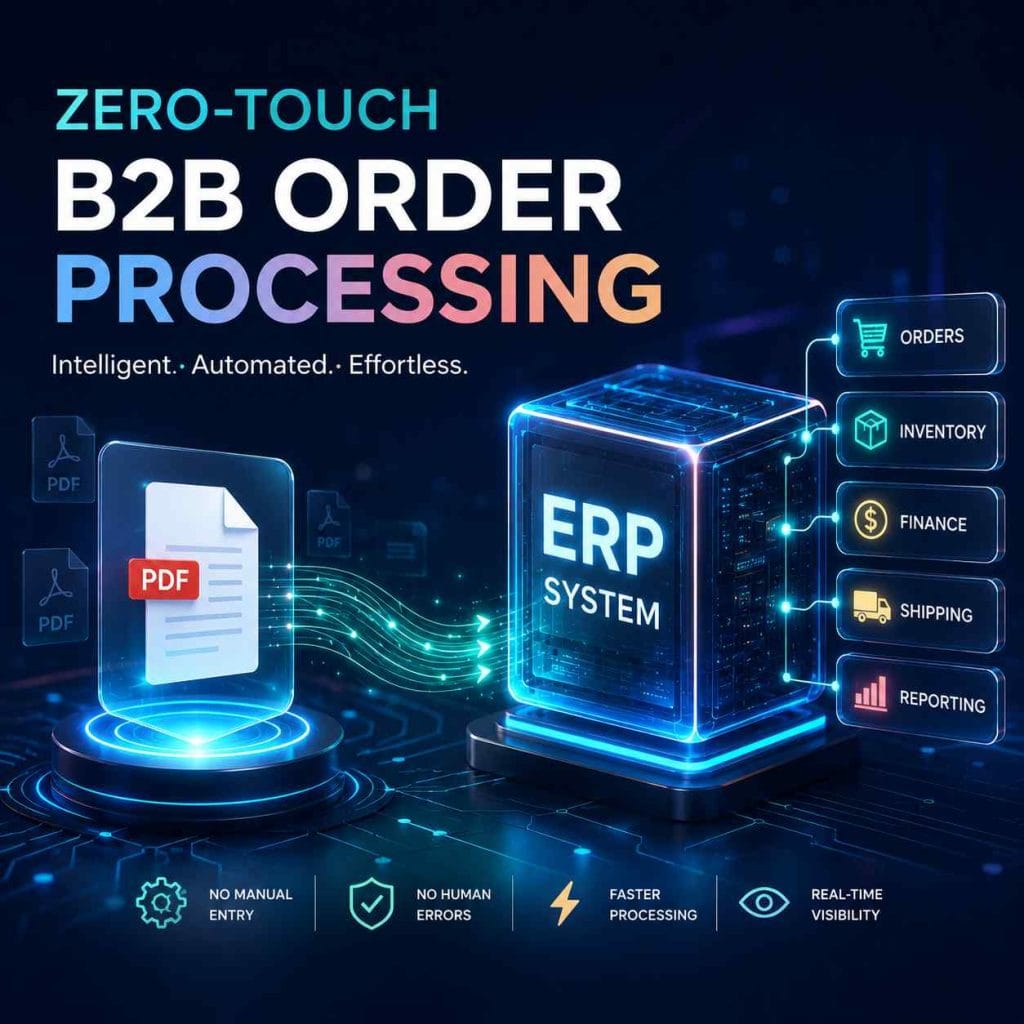
Many manufacturers rely on ERP systems as the backbone of their operations. While these platforms are essential for managing inventory, finance, and order processing, they are not designed to support modern digital commerce.
As a result, the absence of a dedicated digital platform introduces several critical limitations:
Zero Customer Experience Focus
There is no real "customer experience" component in ERP systems. Users cannot browse products easily, find what they want through product discovery, or place orders quickly without being forced into lengthy forms.
Rigid Database Structures
ERP systems are based on rigid database models, making it exceedingly difficult to adapt to dynamic pricing models (e.g., price changes by hour/day/season), personalized catalogs, and modern multi-channel interactions.
Severe Integration Bottlenecks
An architecture based entirely on ERP-centric design creates massive bottlenecks. When all digital processes rely on a single system to function, scalability becomes impossible and overall performance suffers.
Persistent Manual Workflows
Email, spreadsheet, and phone call orders continue to flow in and out, circumventing digital tracking. With each new manual order, the chances of costly human errors and severe fulfillment delays increase exponentially.
The ultimate result is a legacy system that heavily supports back-office operations, but fundamentally restricts your digital growth.
Modern B2B Commerce Architecture
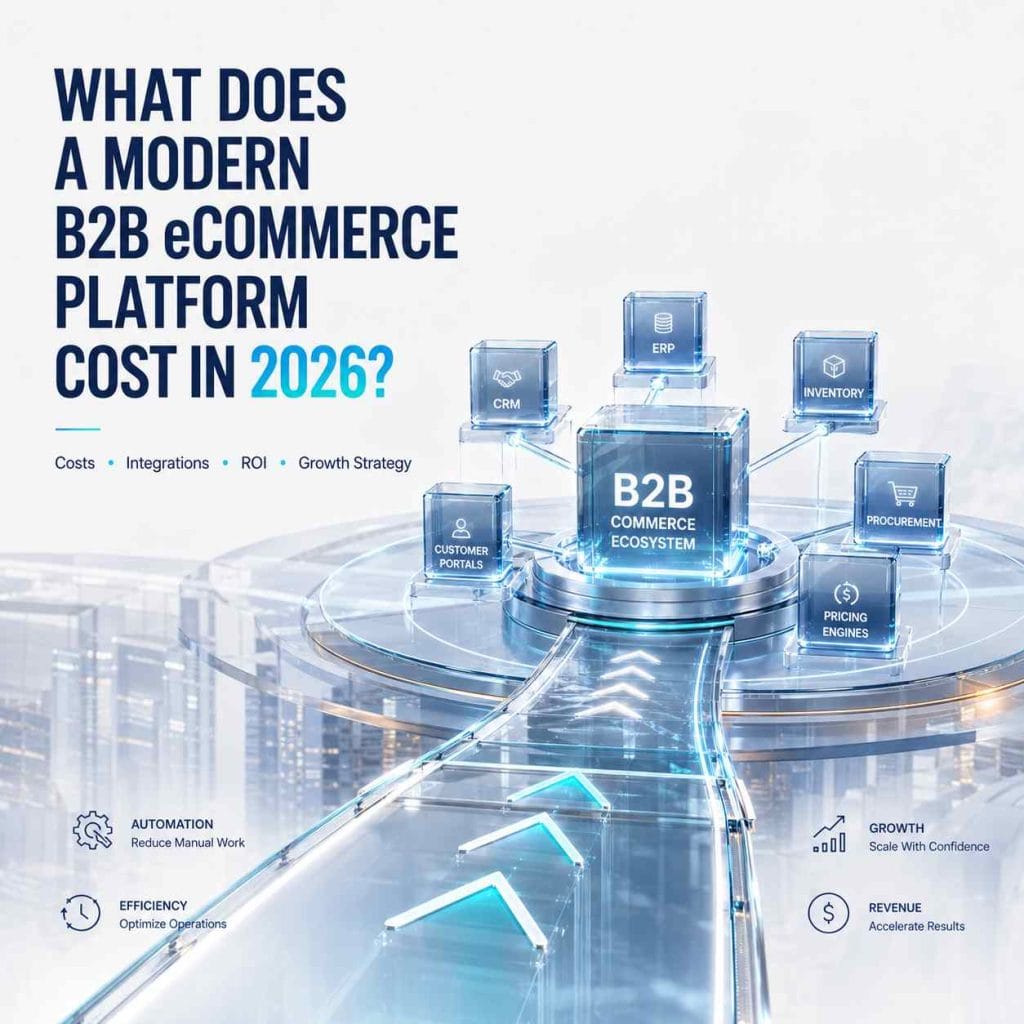
High-performing manufacturers are moving toward a modular, integrated commerce ecosystem.
Dedicated Commerce Platform: The core customer-facing layer (e.g., Adobe Commerce) handling catalogs, complex pricing logic, and ordering workflows.
Connected ERP System: Relieved from UX duties, the ERP returns to its core strength: managing inventory, finance, and order fulfillment in the background.
PIM & Middleware: A centralized PIM ensures product data consistency, while Middleware acts as the bridge tying systems together for real-time data flow.
This paradigm transforms commerce from a system constraint into a strategic growth engine.
Proven Framework for
B2B Implementation
Digital transformation is an evolution. We use a structured, 5-phase methodology to ensure every technical component scales with your business logic.
Architecture Assessment
We analyze your current ERP dependencies and data silos to identify the exact technical bottlenecks restricting your digital growth.
Platform Selection
Evaluating and selecting the right commerce engine (e.g., Adobe Commerce) based on scalability, multi-vendor needs, and integration complexity.
ERP Integration Strategy
Defining real-time data flows between the storefront and ERP. Selecting the middleware layer to ensure low-latency order and inventory sync.
Technical Implementation
Concurrent development of custom frontend experiences and backend workflows, ensuring a seamless bridge across all system layers.
Optimization & Scaling
Post-launch refinement using automated testing and performance monitoring to turn your platform into a high-velocity revenue engine.
Implementation Models:
Choosing the Right Approach
There are multiple ways to engineer your B2B commerce presence. The right choice depends on your requirements for speed, flexibility, and architectural complexity.
Fully Custom Built
Provides absolute flexibility and total control over implementation. Best for organizations with hyper-specific business logic that standard platforms cannot accommodate.
Platform-Based
Leverages built-in B2B features of solutions like Adobe Commerce. Accelerates time-to-market while offering proven scalability and enterprise security.
Headless Commerce
Decouples frontend and backend to enable maximum user experience customization. Future-proofs your stack by allowing seamless third-party integrations.
The Recommended Hybrid Strategy
In most cases, manufacturers benefit from a hybrid approach that combines the out-of-the-box maturity of platform-based solutions with the frontend flexibility of a headless architecture.
Cost Breakdown:
What to Expect
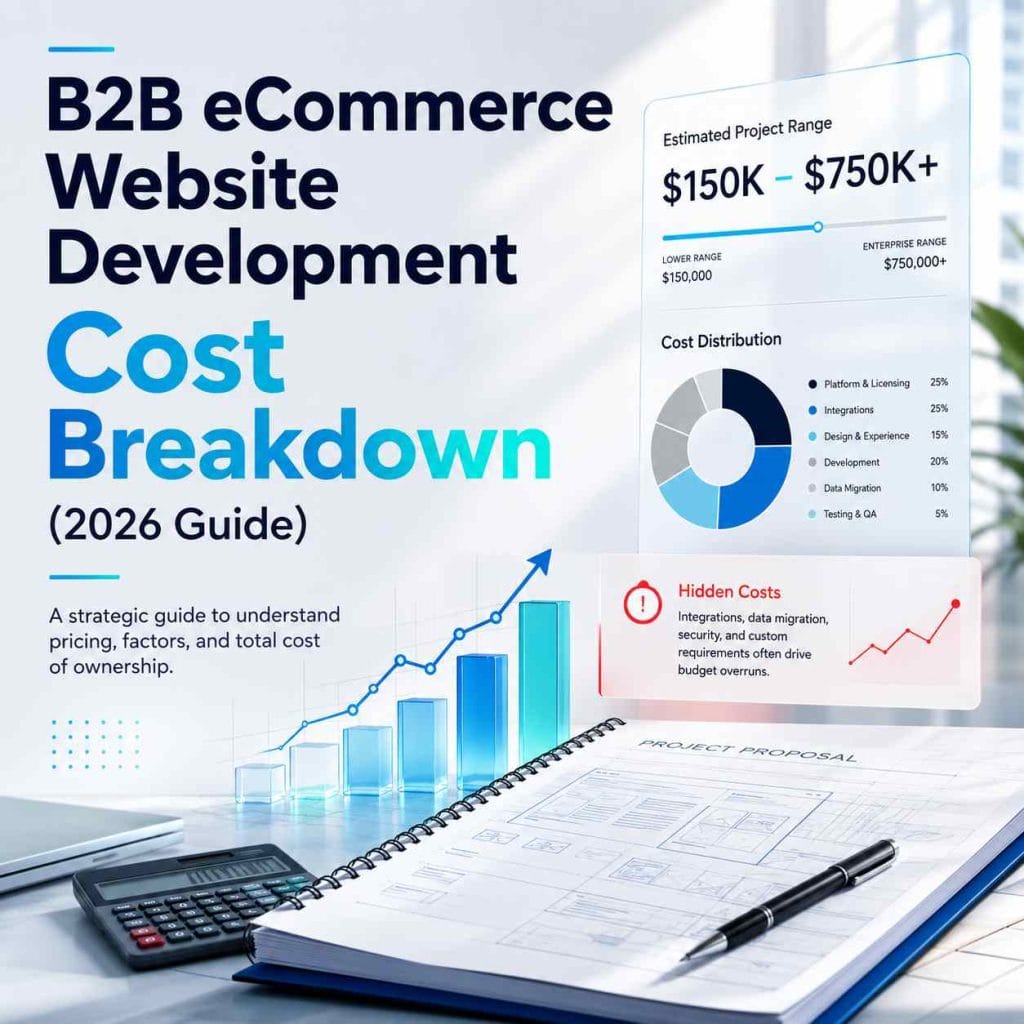
The cost of implementing a B2B eCommerce platform varies depending on complexity, integration depth, and customization requirements.
Platform & Infrastructure
Licensing fees and high-performance hosting infrastructure essential for B2B stability.
Development & Design
Custom frontend UI/UX tailored for manufacturing buyers and complex backend logic.
System Integration
Critical data bridges between the storefront, ERP systems, and PIM solutions.
Ongoing Optimization
Dedicated maintenance, security updates, and continuous conversion rate improvements.
Best for companies seeking essential enterprise features, core system connectivity, and a professional digital sales presence.
For complex, multi-national implementations requiring heavy customization and deep multi-platform architectural orchestration.
Estimate Your B2B Commerce Investment
Get a precise cost analysis tailored to your technical requirements and business goals.
Understanding these components allows for effective planning and the avoidance of unexpected technical debt.
Timeline and
Implementation Phases
A typical B2B eCommerce implementation can take anywhere from 90 days (three months) to 180 days (six months) based on scope and complexity.
Discovery Phase
The discovery phase usually lasts two to four weeks and focuses on requirements gathering and planning.
Architecture Design
Architecture design follows, taking three to six weeks to define system structure and integration strategy.
Technical Development
Development is the most time-intensive phase, typically lasting eight to sixteen weeks.
System Integration
Integration with ERP and other systems can take six to twelve weeks, depending on complexity.
Launch & Optimization
Finally, launch and optimization require an additional two to four weeks to ensure stability and performance.
Structured Execution
A structured timeline helps set expectations and ensures smoother execution.
Common Failure
Points to Avoid
In general, many B2B eCommerce projects fail due to poor strategy and execution rather than technology limitations.
The ERP-First Mindset
A common example is when a company adopts an ERP-first mindset, attempting to force a legacy system into a role it was never designed to perform.
Integration Complexity
Another issue arises when organizations underestimate the complexity of integrating multiple systems. Without a clear strategy, this often leads to data inconsistencies and system failures.
Ignoring User Experience
Ignoring user experience is also a critical mistake. B2B buyers expect the same ease of use they experience in B2C environments.
Operational Complexity
Finally, many companies underestimate the complexities of pricing, product catalog management, and workflows, resulting in project delays and increased costs.
Avoiding these pitfalls requires an architecture-first approach and experienced implementation partners.
Business Impact of B2B
eCommerce Transformation
When implemented correctly, B2B eCommerce delivers measurable business outcomes.
Revenue Growth
Revenue growth is driven by quicker ordering, better consumer experience, and increased order frequency.
Operational Efficiency
Operational efficiency improves through automation, reducing manual work and minimizing errors.
Distributor Relationships
Distributor relationships are strengthened through self-service capabilities and greater transparency.
Enterprise Scalability
Scalability increases, enabling organizations to expand into new markets and channels without adding operational overhead.
As such, these benefits make B2B eCommerce not just a technology investment, but a strategic growth initiative.
Example
Transformation Scenario
Let’s say you’re a manufacturer who relies on manual order processing, with some tasks handled through your ERP.
Current Constraints
Today, orders are placed via clunky emails and spreadsheets, pricing is managed manually, and customers rely heavily on sales reps.
Modern Infrastructure
When you implement a modern B2B commerce platform integrated with your ERP, you can enable self-service ordering, automate pricing, and provide real-time inventory visibility.
The result is faster order processing, reduced operational costs, and improved customer satisfaction.
This type of transformation is increasingly becoming the standard rather than the exception.
How to Choose the Right
Implementation Partner
Choosing the right business partner is important for the success of your B2B eCommerce initiative.
B2B Specialization
When evaluating potential partners, consider whether they have experience developing eCommerce solutions specifically for B2B companies, or if they have only built generic eCommerce solutions.
ERP Integration Capabilities
Ensure the partner has strong ERP integration capabilities, as this is often the most complex aspect of implementation.
Architecture-First Approach
An architecture-first approach is essential. The partner should focus on designing scalable systems, not just delivering features.
Manufacturing Experience
Finally, industry experience in manufacturing and distribution ensures a deeper understanding of your workflows and challenges.
The right partner will act as a strategic advisor, not just a technical vendor.
Is Your Business Ready
for B2B eCommerce?
You are likely ready to invest in B2B eCommerce if:
Your revenue falls within the $20M–$500M range
You rely heavily on manual order processes
Your ERP system limits your ability to scale
You are actively planning digital transformation initiatives
Recognizing these signals is the first step toward building a scalable commerce ecosystem.
Final Thoughts
Manufacturers and distributors are already aware of the need for digital transformation. The challenge now lies in executing it effectively.
B2B eCommerce implementation involves much more than simply launching a new website—it is about building an integrated system that supports growth, efficiency, and customer experience.
Organizations that approach their transformation strategically, with the right architecture and partner, can gain a significant competitive advantage in an increasingly digital marketplace.
Ready to Engineer
Your Blueprint?
Stop managing ERP constraints. Design a unified, modular, and integrated commerce ecosystem built specifically for your complex manufacturing requirements.

 Google Analytics Certified |
|
|
KC Jagadeep, CEO of Ceymox, a leading Magento Development Agency based in India. KC is a passionate entrepreneur, Magento enthusiast, and advocate for open-source solutions, dedicated to enhancing the landscape of online commerce, particularly within the realm of Magento.Driven by the pursuit of creating and executing successful strategies and platforms for digital commerce, KC brings over 12 years of industry experience to the table. His mission is simple: to empower corporate eCommerce clients with effective digital commerce solutions and modern marketing practices, ultimately boosting profitability.As an entrepreneur with a proven track record in information technology and eCommerce services (including Magento and WooCommerce), KC possesses expertise in operations management, startups, various eCommerce platforms, and business process outsourcing.
View All Articles