Why Manufacturers are Moving to B2B eCommerce.
The future of production is integrated. In 2026, manufacturers are leveraging digital ecosystems to automate supply chains, unlock real-time transparency, and scale global operations.
The Tipping Point of Digital Procurement
By the end of 2026, B2B sales interactions between suppliers and buyers through digital channels are expected to be around 80%. We are well beyond the time when manufacturers could use digital commerce as a "value add." If a distributor in the US, UK, or UAE is unable to place an order, check its real-time inventory, or review the pricing of their contract at midnight on a Sunday, you can be certain they are currently searching for a supplier that can do so.
The year 2026 is a threshold year for CEOs of manufacturing enterprises with revenue levels ranging from $20 million to $500 million. A generational shift has occurred in procurement led by digital natives, and this shift has now reached a tipping point.
The "relationship only" sales model is no longer merely slowing down but has become a constraint to your company's scalability.
The 2026 Landscape: Efficiency as the New Currency
The global manufacturing industry today is experiencing a “perfect storm” of increasing labor costs, highly unstable and unpredictable supply chain dynamics, and decreasing profit margins. Operational efficiency has become the most important factor driving manufacturer profits — rather than pure production volume.
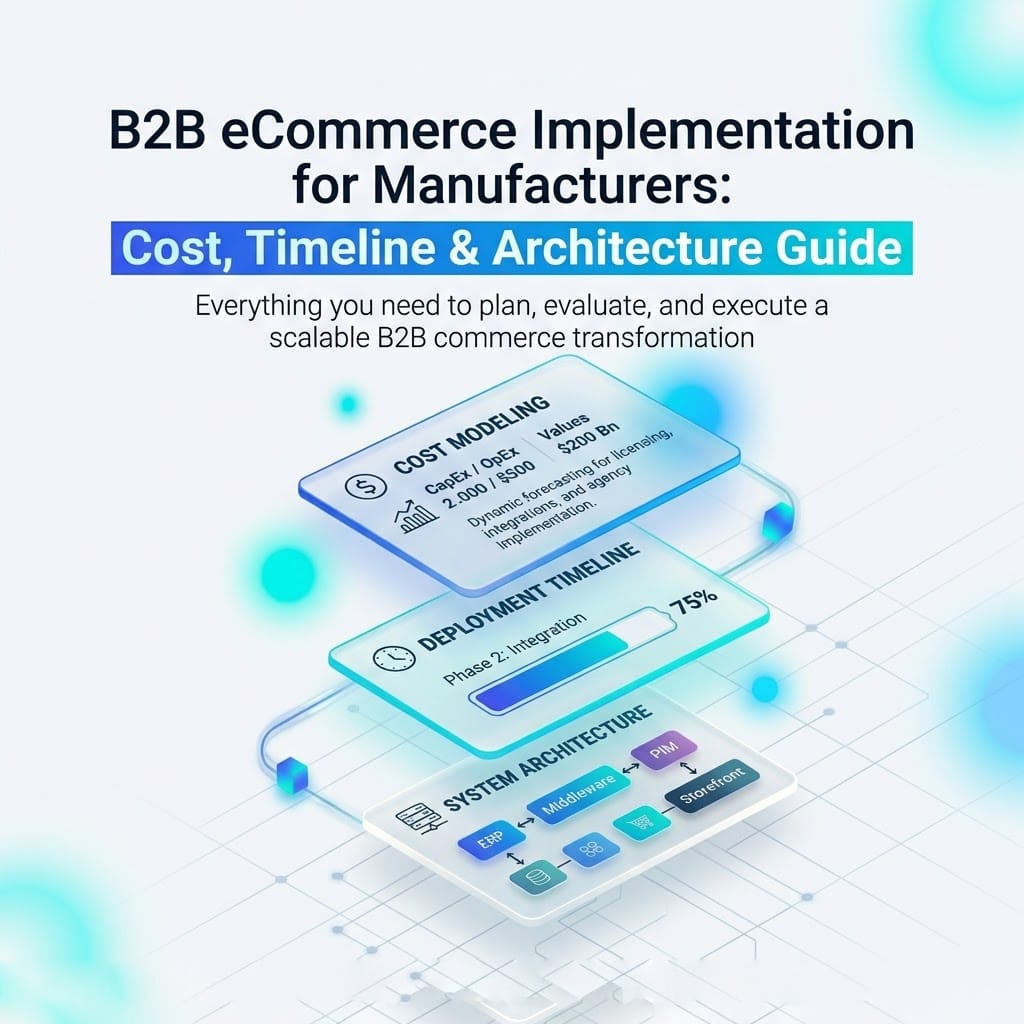
In 2026 digital transformation is no longer just about “having a website” but about developing an unified ecosystem that enables your Enterprise Resource Planning (ERP), Product Information Management (PIM) system, and commerce engine to operate together seamlessly.
B2B e-commerce is being adopted by manufacturers for one reason: B2B e-commerce provides manufacturers with the ability to automate the transactional "noise," and allow their sales professionals to focus on higher-value activities including strategy consulting and growing strategic accounts.
Core Problem Breakdown: The Pain Points Driving the Move
Why are traditional manufacturers suddenly rushing toward digital commerce? It is usually a response to five systemic failures in the analog model:
The "Tribal Knowledge" Dependency
Many manufacturers depend on a small number of experienced staff members that understand the specific customer price rule requirements that are often very complicated. In the event that an employee retires or moves on, the company is left without the knowledge to provide an accurate price quote. The digital commerce model provides a way for a business to develop a scalable platform that replicates the knowledge of those experienced staff members in a formalized process.
Extreme Manual Order Friction
Handling orders via email, phone calls and manual ERP input increases the risk of errors. In 2026, the administrative cost of a manual order is an unnecessary tax on your margins. Manual entry of orders can lead to 3 to 5 percent error rates, leading to costly returns and frustrated channel partners.
Invisibility in the Research Phase
Modern B2B buyers research nearly three-quarters of their own buying process before ever reaching out to a sales representative. If your technical specs, CAD files, and compatibility data are not indexed and searchable then you will be eliminated from the bidding process before you even know it exists.
Inventory Data Silos
The "call for availability" response is now unacceptable. The lack of visibility of inventory data to the buyer from the locked ERP system creates a "black hole" at the time of sale. Buyers are looking for the certainty of having real-time access to available stock levels of material to manage their own production schedule.
Scalability Limits of Headcount
In an analog model, your revenue is capped by the number of orders your staff can manually process. To double your revenue, you must double your administrative headcount. Manufacturers are moving to eCommerce to decouple revenue growth from headcount growth.
The Business Impact: Risks of the Status Quo
Staying analog in 2026 introduces major operational and growth challenges that directly impact profitability and global competitiveness.
Operational Risk
High overhead costs per order make you uncompetitive against leaner digital-first rivals. Manual order processing reduces efficiency and increases operational expenses.
Revenue Risk
Distributors may shift to competitors offering smoother purchasing experiences. Friction in your ordering process can directly cause customer churn.
Scalability Risk
Entering global markets becomes slower and more complex without digital infrastructure capable of managing pricing, localization, and tax structures.
Educational Framework:
The 3 Pillars of 2026 Commerce
To understand this shift, we look at the Enterprise Commerce Framework — a modern blueprint for decoupling revenue growth from administrative headcount.
Automation of Transaction
Moving routine reorders to a self-service portal. By digitizing the purchase path, manufacturers eliminate manual overhead, allowing the system to scale infinitely without adding headcount.
Accuracy of Data
Ensuring ERP-synced pricing and inventory remain 100% accurate 24/7. This removes human middleware and provides buyers with real-time procurement reliability.
Augmentation of Sales
Freeing sales teams from order-taking so they can act as strategic advisors, focusing on consulting, growth strategy, and long-term customer relationships.
The Mini-Solution: Modern Architecture
The move to digital (2026) will not be a “rip and replace” for the legacy ERP. A headless commerce solution like Magento/Adobe Commerce allows you to build a complex customer experience on top of your current back-end systems. It will allow you to deliver a “consumer grade” buying experience, while keeping your back-end safe, and stable.
Stability Without Stagnation
This "headless" approach delivers a consumer-grade buying experience while keeping your back-end safe and stable. You gain the agility to innovate on the front-end without the risk of a full-scale infrastructure overhaul.
The journey from analog to digital is long, and a structure is essential. For those ready to move from problem awareness to execution, we recommend reviewing our Digital Transformation Roadmap for Manufacturing Companies . By the time, for any B2B eCommerce requirement connect with us: https://ceymox.com/solutions/b2b-e-commerce-development/.

 Google Analytics Certified |
|
|
KC Jagadeep, CEO of Ceymox, a leading Magento Development Agency based in India. KC is a passionate entrepreneur, Magento enthusiast, and advocate for open-source solutions, dedicated to enhancing the landscape of online commerce, particularly within the realm of Magento.Driven by the pursuit of creating and executing successful strategies and platforms for digital commerce, KC brings over 12 years of industry experience to the table. His mission is simple: to empower corporate eCommerce clients with effective digital commerce solutions and modern marketing practices, ultimately boosting profitability.As an entrepreneur with a proven track record in information technology and eCommerce services (including Magento and WooCommerce), KC possesses expertise in operations management, startups, various eCommerce platforms, and business process outsourcing.
View All Articles