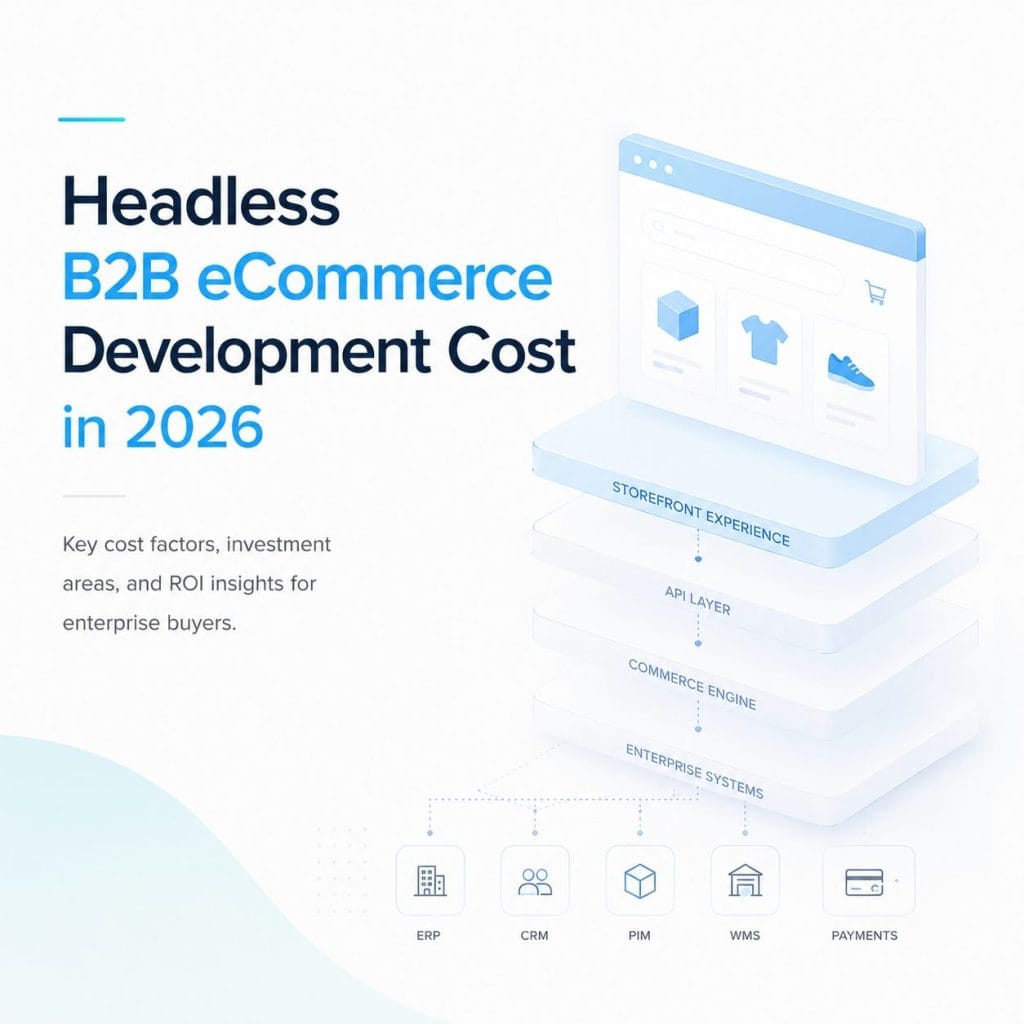
What Does a Modern B2B eCommerce Platform Cost in 2026?
Understand platform licensing, integrations, custom development, ERP connectivity, and long-term support costs before making your next digital commerce investment.
$15K–$500K+
Typical investment range for scalable B2B commerce ecosystems depending on integrations, complexity, and business requirements.
Understanding B2B eCommerce Investment in 2026
For manufacturers, distributors, wholesalers, and enterprise suppliers, the question is no longer whether to invest in B2B ecommerce.
The real question becomes: "How much should we invest in a platform that will support our next decade of growth?"
Companies relying on manual ordering processes, spreadsheets, emails, WhatsApp orders, and disconnected systems are finding themselves at an increasing competitive disadvantage as digital procurement becomes the norm and buyers continue to expect the same convenience they experience with consumer commerce.
One of the biggest myths about B2B eCommerce is related to cost.
While some companies may believe that launching a scalable enterprise platform will cost no more than a few thousand dollars, others believe that an enterprise commerce solution would require a multi-million-dollar budget.
What happens is usually somewhere in between.
Here, we explain what you should expect in terms of costs for modern B2B eCommerce platforms in 2026, what influences these prices, common areas of overspending by organizations, and finally provide guidance to leadership teams on evaluating ROI before making their final decisions.
Explore Your B2B Commerce Opportunity
Planning a B2B eCommerce initiative in 2026?
Whether your business is in manufacturing, distribution, wholesaling, or enterprise supply, our staff will assist in evaluating the required technical specifications of each platform, as well as the costs associated with implementing integrations with systems prior to making any technological investments.
Talk to the Ceymox B2B Commerce ExpertsThe Cost Question Most Companies Ask Incorrectly
"How much does a B2B eCommerce website cost?"
"What investment is required to create a digital commerce ecosystem that reduces operational costs, improves customer experience, and scales revenue?"
A modern B2B eCommerce platform is no longer just a website.
It typically includes:
When evaluated through this lens, the investment becomes significantly more strategic than simply launching a website.
Why B2B eCommerce Investments Are Increasing in 2026
Across all sectors of business, the way people behave when it comes to making purchases through their procurement departments is changing dramatically. Today's consumers expect:
Today's Buyer Expectations
Business Objectives
Younger buyers in various studies across different industries have expressed a preference for using digital purchasing channels as opposed to traditional sales-based interaction models. Because of this change, many organizations are committing to utilizing digital commerce systems to modernize operations and improve customer experiences. These same organizations will also create competitive advantages as a byproduct of their earlier investment, and those competitive advantages will be very difficult for slower-moving competitors to duplicate.
The Five Major Cost Drivers of a B2B eCommerce Platform
Understanding these drivers helps leadership teams evaluate proposals more effectively.
Platform Selection
Technology foundation impacts both initial and long-term investment requirements.
Integration Complexity
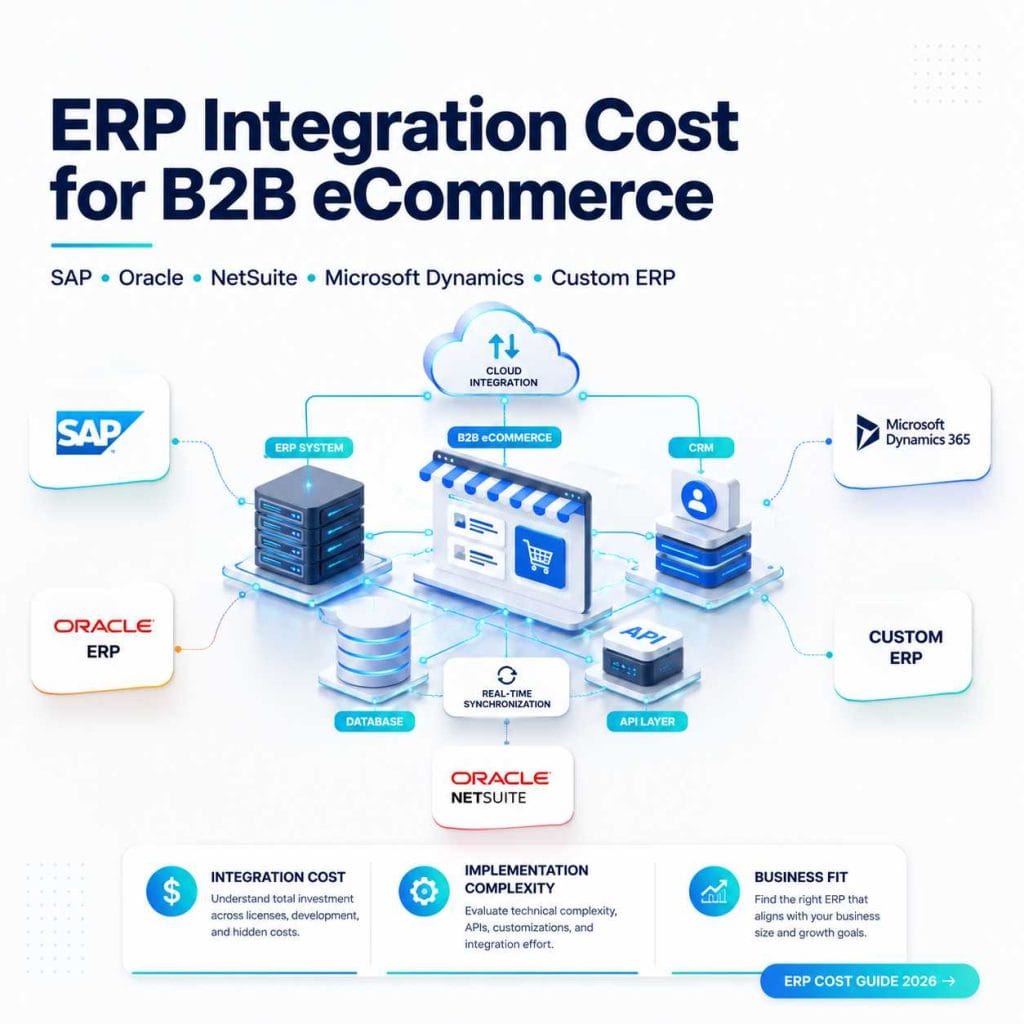
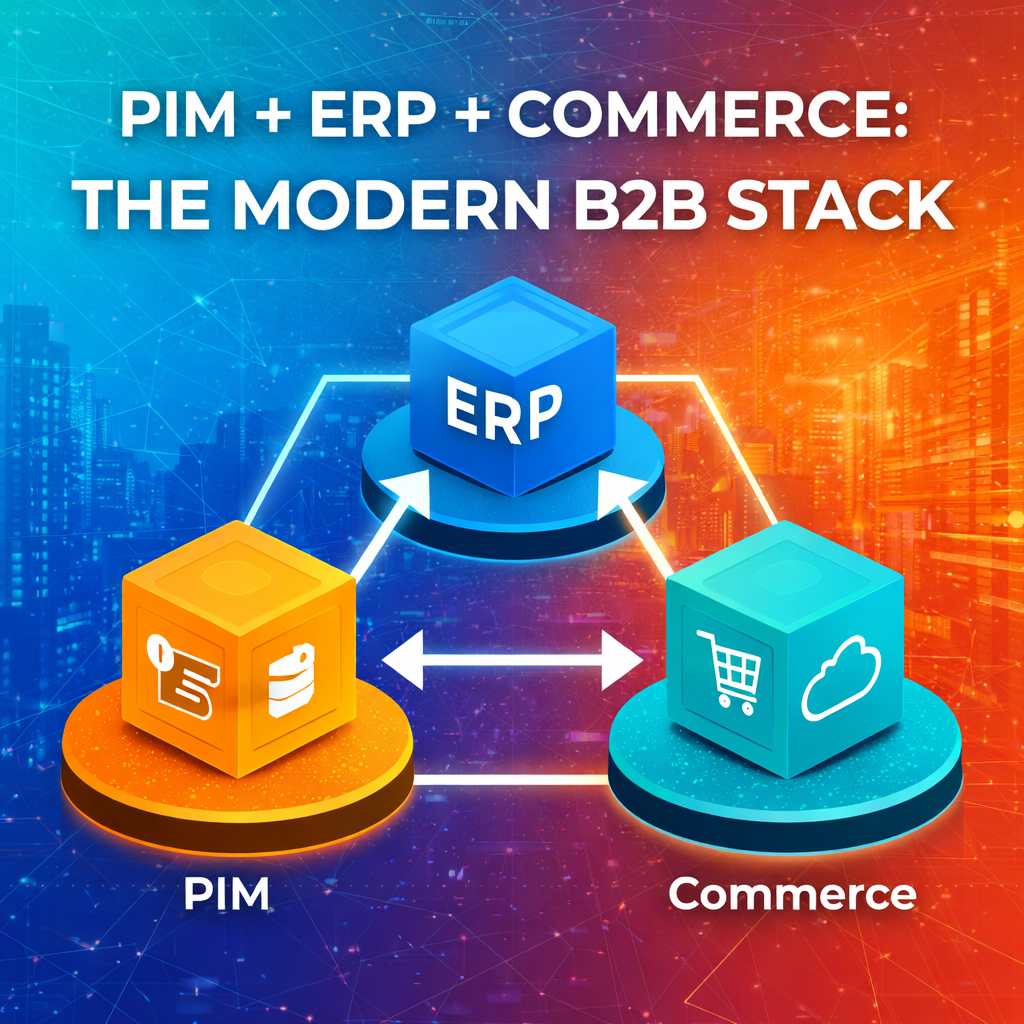
ERP, CRM, inventory and procurement integrations often drive major project costs.
Business Rules
Customer-specific pricing, approvals and workflows increase implementation effort.
User Experience
Search, ordering tools, dashboards and mobile optimization influence adoption.
Security & Compliance
Authentication, encryption and governance requirements add ongoing costs.
Typical B2B eCommerce
Cost Ranges in 2026
While every project is unique, most enterprise organizations scale efficiently within one of the following deployment categories.
Entry-Level B2B Commerce
- Small distributors
- Regional wholesalers
- Early-stage manufacturers
- Product catalog & responsive design
- Authenticated customer accounts
- Basic ordering & payment integrations
- Limited business logic automation
- Minimal third-party system integrations
- Reduced enterprise scalability bounds
Growth-Focused Platforms
- Growing manufacturers
- Multi-region distributors
- Mid-market enterprise suppliers
- Live ERP core system integration
- Customer-specific account pricing structures
- Advanced procurement ordering workflows
- Real-time inventory synchronization
- Sales agent portal functionalities & analytics
This architectural tier is where serious B2B networks begin generating substantial long-term operational efficiencies.
Enterprise Ecosystems
- National supply distributors
- Enterprise manufacturers
- Global multi-market suppliers
- Multi-brand architecture & storefront controls
- Complex legacy system & API middleware integrations
- Advanced workflow and approval automation
- Corporate procurement management layers
- Headless commerce structures & AI personalization
- Predictive enterprise analytics engines
For large scale organizations, the deployed platform establishes itself as a mission-critical revenue channel.
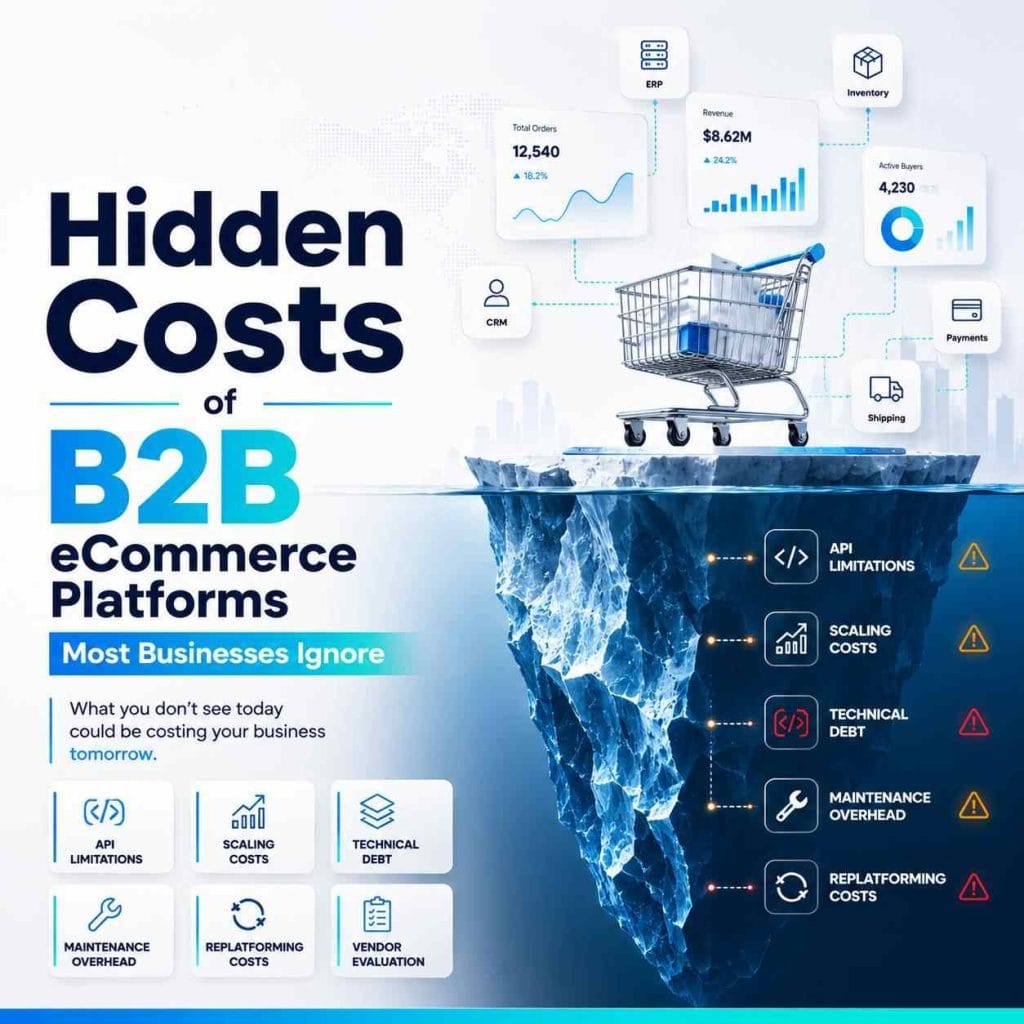
The Hidden Costs Many Companies Miss
One major reason many companies exceed budgets is failure to account for all implementation and operational costs.
Data Migration
Migrating core business data requires structured planning and execution:
Often more complex than expected.
Change Management
Teams must adapt to new digital workflows and operational processes:
Adoption directly impacts ROI success.
Ongoing Optimization
Continuous improvements drive long-term performance:
B2B commerce is an evolving revenue system.
Hidden costs are often not technical — they are operational, organizational, and long-term in nature.
The Real ROI of B2B eCommerce
Leadership teams focus heavily on implementation cost, but the real value comes from measurable efficiency gains and long-term ROI.
Example Scenario
Fewer Order Errors
Higher Reorder Frequency
Improved Customer Retention
Reduced Sales Admin Load
The economics quickly become compelling, with many organizations recovering their investment faster than expected through efficiency gains.
Calculate Your Potential ROI
Before choosing a platform for B2B commerce, make sure you understand both the cost-saving benefits and the potential revenue-generating opportunities that exist within your organization.
Cost Reductions
Revenue Growth Opportunities
Integration Requirements
Platform Recommendations
Benefits Include
Better Forecasting
Improve planning accuracy with centralized and connected business data.
Improved Customer Insights
Gain a clearer understanding of customer behavior and purchasing patterns.
Faster Decision-Making
Enable leadership teams to act quickly using reliable real-time information.
How to Budget for a B2B eCommerce Project
A practical approach to structuring a solution or project is to divide it into five categories of activity. This helps control and manage the complexity of the development process:
Platform Development
Core commerce functionality including catalog, checkout, pricing, and system logic.
Systems Integration
ERP, CRM, inventory, and backend system connectivity and synchronization.
User Experience Design
Customer journeys, UI/UX design, and usability optimization.
Testing & QA
Performance validation, security testing, and quality assurance.
Training & Adoption
Team onboarding, training, and rollout support for smooth adoption.
Questions Every Leadership Team Should Ask Before Investing
Will this platform continue to support your business model over the next five years?
How will your existing infrastructure integrate with the new platform?
Which current operational costs can be reduced or eliminated through this platform?
How will users benefit from using this platform?
Does the platform have the potential to scale internationally?
What is the strategy for driving customer adoption?
Which metrics will be used to measure the success of the new platform?
Why Choosing the Right Implementation Partner Matters
Technology alone will not deliver a business outcome. The implementation partner directly influences the success, scalability, and long-term value of your commerce investment.
A Partner Beyond Development
A strong implementation partner aligns technology decisions with long-term business objectives, ensuring the platform continues to support growth long after launch.
Results Beyond the Website
Success is measured through operational efficiency, customer adoption, revenue growth, and measurable business outcomes—not simply the delivery of a website.
Key Takeaways
The overall cost of a contemporary B2B eCommerce system in 2026 can vary widely, ranging from tens of thousands to several hundred thousand dollars, depending on the complexity of the solution, the number of integrations with existing systems, the size of the platform, and the specific needs of the organization.
In addition to viewing eCommerce as purely a technology expense, organizations will be most successful when they see it as an investment in improved operational efficiency, enhanced customer experience, increased revenue, and long-term competitive advantage.
Companies that build flexible digital commerce platforms now, as procurement behavior continues to evolve over the coming years, will be better positioned to take advantage of future opportunities.
Ready to Understand What a B2B eCommerce Platform Would Cost for Your Business?
Every organization has its own needs, systems, workflows, and growth goals. Ceymox helps manufacturers, distributors, wholesalers, and enterprise brands evaluate, plan, design, and execute a scalable B2B commerce ecosystem with measurable business results.
Schedule Your Strategy Session →Everything You Need to Know About B2B eCommerce Costs
Clear answers to the most common questions about pricing, timelines, and ROI for modern B2B commerce platforms.
Typically, companies invest anywhere from $15,000 to over $500,000 to build an eCommerce solution, depending on platform capabilities, integrations, custom workflows, and growth ambitions.
The most expensive part is usually system integrations such as ERP, CRM, inventory systems, and accounting platforms that ensure real-time operational synchronization.
Most B2B eCommerce implementations take between 3 to 12 months depending on scope, complexity, integrations, and customization requirements.
Yes. It reduces operational costs, improves retention, increases repeat orders, and enables scalable revenue growth through automation and digital procurement systems.



Santhosh P is the Chief Technology Officer (CTO) of Ceymox, bringing over 15 years of experience in e-commerce development and more than 13 years of expertise in Magento. He has completed numerous projects for clients across various industries and regions.He has extensive experience in Magento PWA (Progressive Web Apps), VueStoreFront, and Scandi PWA, delivering fast, responsive, and user-friendly experiences for online shoppers. His proficiencies include:Hyvä Magento speed optimization Magento 2 migration and upgrade Magento extension development Magento mobile development Adobe Commerce development Third-party integration with Magento Magento core functionality enhancement Magento multi-store and multi-website development Magento SEO customization Magento marketplace integration Magento ERP/CRM integration Magento mobile integration (Android, iOS)Santhosh holds multiple Adobe certifications, including Adobe Certified Expert - Adobe Commerce Developer, Adobe Certified Professional - Adobe Commerce Developer, and Magento 1 Certified Developer Plus.
View All Articles