How to Prepare Your ERP for eCommerce Integration
Successful B2B digital transformation relies on a fully-transactional ecosystem. Learn how to transition your ERP from a static System of Record into a high-performance engine for modern digital commerce.
The $250,000 "Integration Blind Spot"
Research indicates that up to 70% of delays in B2B Ecommerce project timelines are not due to the frontend storefront, but are caused by 'integration friction' with the backend ERP. Manufacturers and distributors typically invest a lot of money in building a nice user experience on the front end of their website, only to find out later that their Enterprise Resource Planning (ERP) system cannot support the real-time needs of today's digital buyer.
If a CEO or IT Director fails to get the ERP ready, it does not simply delay the launch of the site; it may also create errors in order fulfillment, inaccuracies in pricing, and a “black hole” of technical debt, which could cost hundreds of thousands of dollars to correct after launch. The ERP is not an IT checkbox but is the foundational element required to enable a scalable digital sales channel.
Caused by Backend
Integration Friction
The Transformation Landscape:
Moving from Silos to Synergy
Traditional "Walled Garden"
The traditional B2B model has treated the ERP as a “walled garden” (i.e., a system of record) for internal staff use to run the back office. Data remains localized, limiting external connectivity and speed.
2026 "System of Engagement"
In 2026, the ERP must be transformed into a “system of engagement.” It will have to push and pull real-time data across various channels to meet modern B2B buyer expectations.
Supply chain volatility has become the new normal in countries such as the US, UK, and UAE. Therefore, the ability to synchronize inventory, contract pricing, and credit limits on a commerce platform is what sets market leaders apart from companies that continue to operate manually and inefficiently.
6 Core Challenges in ERP Preparation
The Data Hygiene Crisis
Legacy ERPs are typically cluttered with “dirty data,” such as incomplete product SKU descriptions, varying unit-of-measure (UOM) definitions, and duplicate customer records. Internal staff may be able to navigate these issues using “tribal knowledge,” but an e-commerce platform needs standardized data in order to function correctly.
API Limitations and Latency
Traditional or old on-premise legacy ERPs were developed for batch processes. The traditional process would update once per day rather than through real-time API connectivity. If your legacy ERP is unable to handle simultaneous API requests for live inventory and pricing without crashing or lagging, it will result in a poor and sluggish user experience at the digital storefront.
Fragmented Product Logic
In an ERP, a product might exist as a single line. In eCommerce, the same product needs multiple high-resolution images, safety data sheets, and complex cross-selling relationships. Preparing for integration often reveals that the ERP lacks the fields necessary to store this "rich" product information.
Complex Pricing Matrices
B2B pricing does not always follow a "one size fits all" model. Manufacturers will frequently maintain thousands of individualized pricing documents as part of their customer contracts. As long as the pricing rules that apply to each customer are determined by manual overrides in the ERP system rather than a systematic method of determining how much a particular product costs, it will be difficult for a manufacturer to translate those pricing rules into an automated web portal.
Non-Standard Order Workflows
Most of the time, an eCommerce platform is set up to follow a basic workflow: Order → Payment → Ship. But most manufacturers are going to have some sort of non-standard workflow, whether it be partial shipments, backorder holds, credit-limit approvals, etc. If you don't map out and clean up this workflow in your ERP before integrating, it's going to fail on day one.
Security and Firewall Barriers
An internal ERP system is exposed to a publicly accessible website, which necessitates a sophisticated security configuration. A number of IT departments have found that they do not have sufficient security protocols in place to support communication between a commerce engine such as Magento and their ERP system.
The Business Impact of Poor Preparation
Operational Risk
Inaccurate inventory display leads to overselling and canceled orders, damaging your reputation with top-tier distributors.
Revenue Risk
Integration delays push back your "Go-Live" date, allowing competitors to capture market share while you are stuck in development.
Scalability Risk
A "bolted-on" integration that wasn't properly prepared will require constant manual patching, making it impossible to add new channels or regions.
The Educational Framework:
The ERP Readiness Roadmap
To ensure success, we suggest a four-pillar framework for preparation to transition your ERP into a high-performance engine for modern digital commerce.
01 Data Audit
Standardizing SKUs, UOMs, and customer IDs to ensure the e-commerce platform can function correctly without relying on "tribal knowledge."
02 Logic Mapping
Defining exactly how contract pricing and tax logic flow from the ERP to the web to maintain consistency across all sales channels.
03 Connectivity Test
Assessing the ERP's API performance under load to prevent sluggish user experiences or system crashes during high-traffic periods.
04 Middleware Strategy
Deciding if you need a "buffer" layer (Middleware) to protect the ERP from web traffic and ensure seamless data synchronization.
Path to Success:
A Structured Approach to Integration
The goal is to get your ERP prepared, but don’t think you have to redo your whole business history. Your goal should be to create a “translation layer” that will allow your historical or legacy logic to function well within a digital environment.
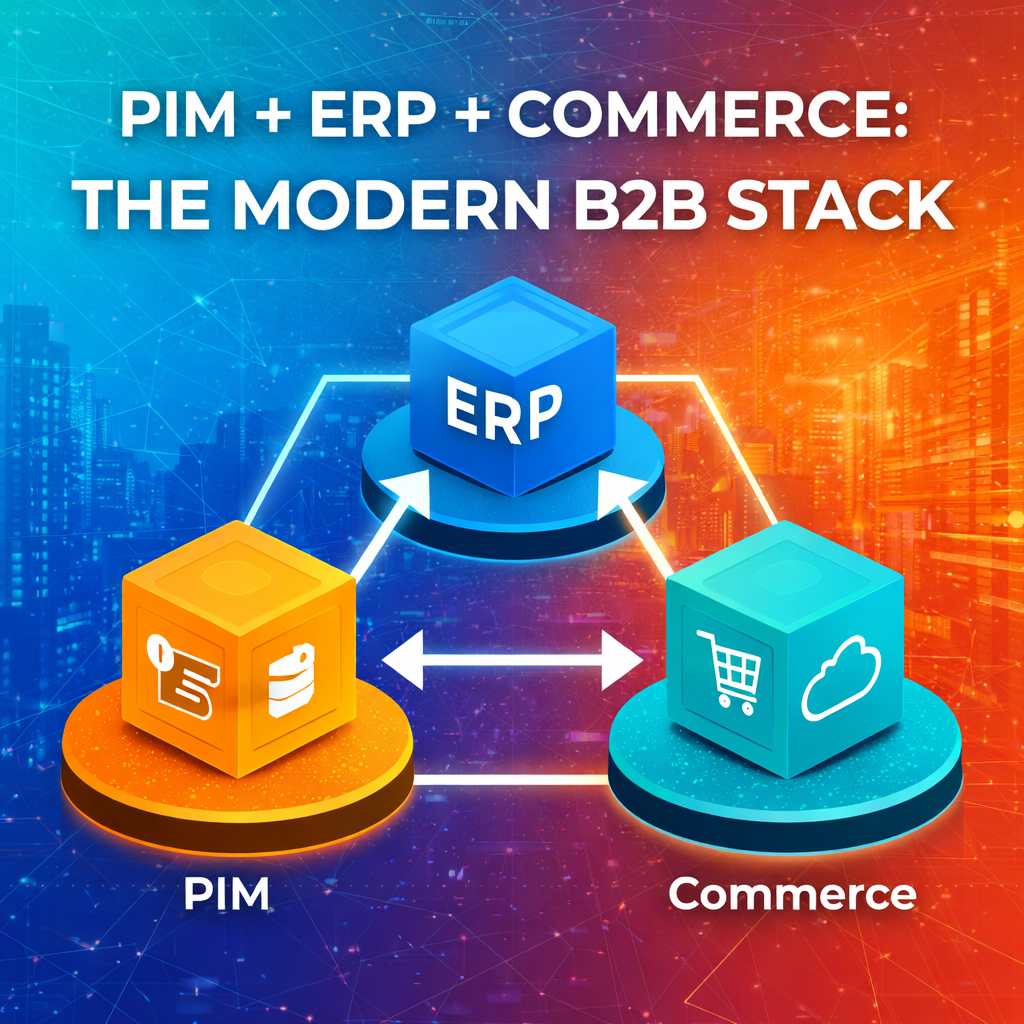
Modern architecture—specifically headless commerce—provides strong platforms for bridging this gap. While your ERP manages fulfillment and finance, your commerce engine manages the customer experience.
Connect with Our B2B Experts
Discover how our structured approach to ERP integration can scale your operations.
Our deep-dive guide for Manufacturers & Distributors is coming soon.


Jancy Abraham, an enthusiastic and passionate Senior Magento Developer at Ceymox, boasting over 9 years of expertise in website development, with a dedicated focus on Magento 2. In her illustrious career spanning 7+ years in Magento, encompassing both Open Source and Commerce editions, she has been instrumental in crafting innovative solutions since October 2013. Jancy has spearheaded the development of numerous Magento extensions tailored to diverse projects, showcasing her exceptional skills and commitment to excellence. Notably, she holds the prestigious Adobe Commerce Developer Professional Certification, underscoring her proficiency and dedication to mastering her craft.
View All Articles